

What is a Push-To telescope finder?
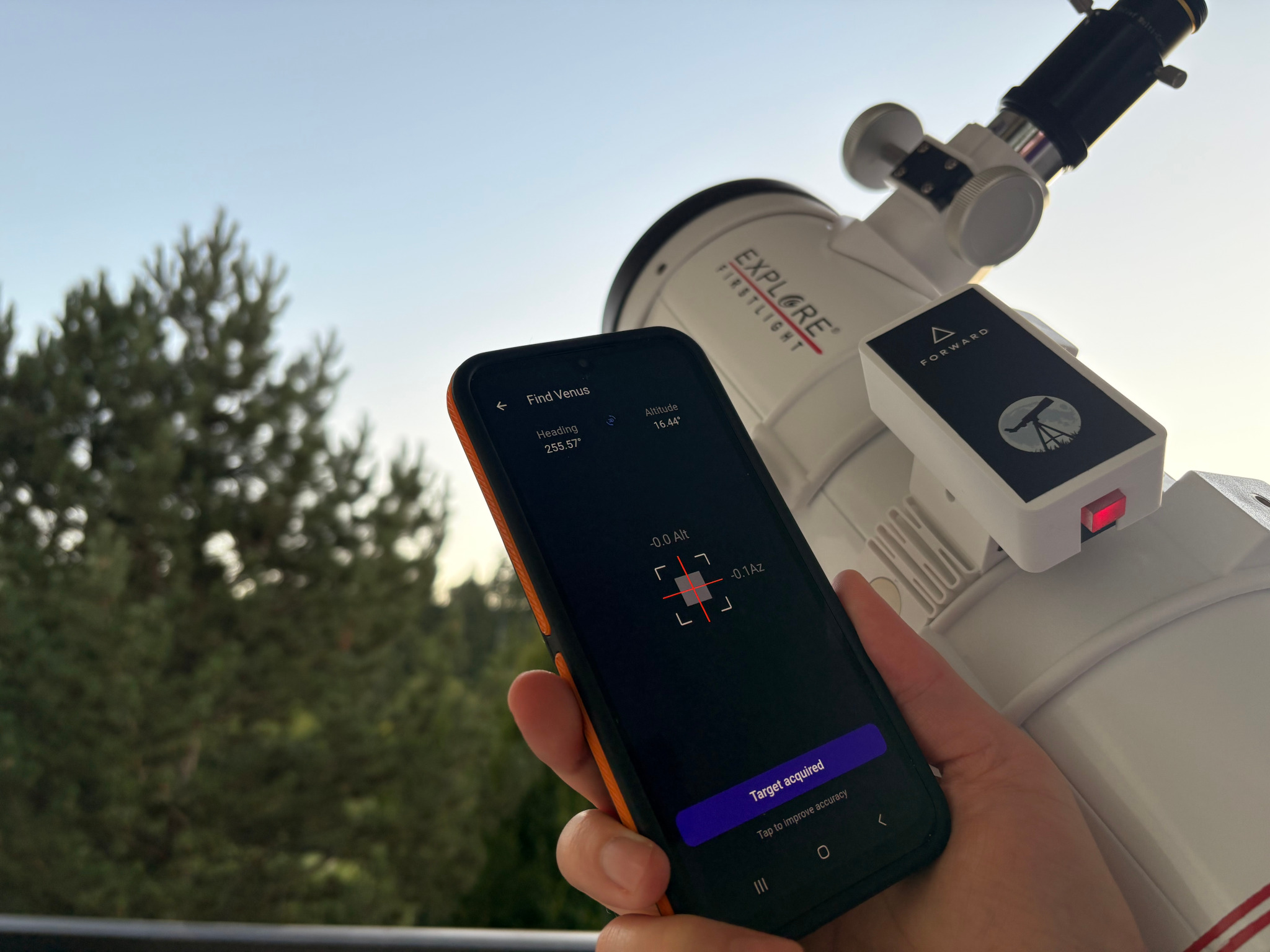
A Push-To telescope accessory is something that helps you find things in the night sky. It tells you where to push your telescope so you lock on target quicker. This awesome technology helps you learn the constellations, find deep-space objects, and generally experience the wonder of the cosmos: without having to know everything upfront.
Push-To accessories come in many forms. For example: Stargraph uses sensors to watch how the telescope moves, so it can understand where you're pointing and where to go next. Other types of Push-To accessories include phone mounts that use just your phone sensors, plate-solving devices that take a picture of the stars to identify pointing angle, and mechanical encoders.
A breakdown of accessory types
Sensor-based
Stargraph falls in the sensor-based category. These types of devices typically have a gyroscope, an accelerometer, and maybe a magnetometer. By combining different sensor types, the device is able to know where you're pointing through dead reckoning. This class of device strikes a nice balance between cost and accuracy.
Plate solving
Contrary to sensor-based Push-To accessories, you have the plate solving alternatives. These devices typically cost more because they use a small camera to take photos of the night sky and calculate where you're pointing using the stars. (Although some brands can utilize your phone itself). A very cool technology and typically extremely accurate, but often laggy and bulky.
Encoders
Lastly we have encoders or "Digital Setting Circles". These devices can be quite accurate because they use precise mechanical features to measure exactly how far the telescope has moved across each axis. Although very precise, they are difficult to install since you need to outfit your telescope on each axis with physical sensors.
How accurate are Push-To telescope finders?
What does it mean to be "accurate"? Typically you want the target to land in the eyepiece and the closer to the center, the better. All of these finders will have some degree of error either due to the telescope mount itself, the math, etc. A low-powered eyepiece typically shows about 1 degree of sky (or roughly, two full moons across). Anything within 0.5 degrees will land in the viewport.
So how accurate are these devices?
| Type | Accuracy | Cost |
| Sensor-based (like Stargraph) | Targets typically land within 0.5 degrees | Low |
| Plate Solving | The most precise once it has a fix, but it needs clear skies to operate | Medium |
| Encoders | Dependent on installation. They can be pretty accurate but the room for error is high. | High |
Who should invest in Push-To accessories?
Stargraph can provide a lot of value in many different scenarios. It's perfect for a beginner telescope enthusiast who wants to learn the night sky, or the astrophotographer who is trying to shoot a Messier cluster, or even seasoned astronomy outreach folks who want to quickly lock on target during a public event.
The biggest thing to watch out for is compatibility. Many entry-level telescopes have proprietary bracket systems and you may need a converter to install red-dot finders and Push-To devices alike. In general, Stargraph will mount to Dobsonians, Altitude-Azimuth, Equatorial, and Fork-Mount telescopes. Just be sure to double check the bracket situation.
On the flip side, Push-To accessories are not adding much value to folks who already have a GoTo telescope.
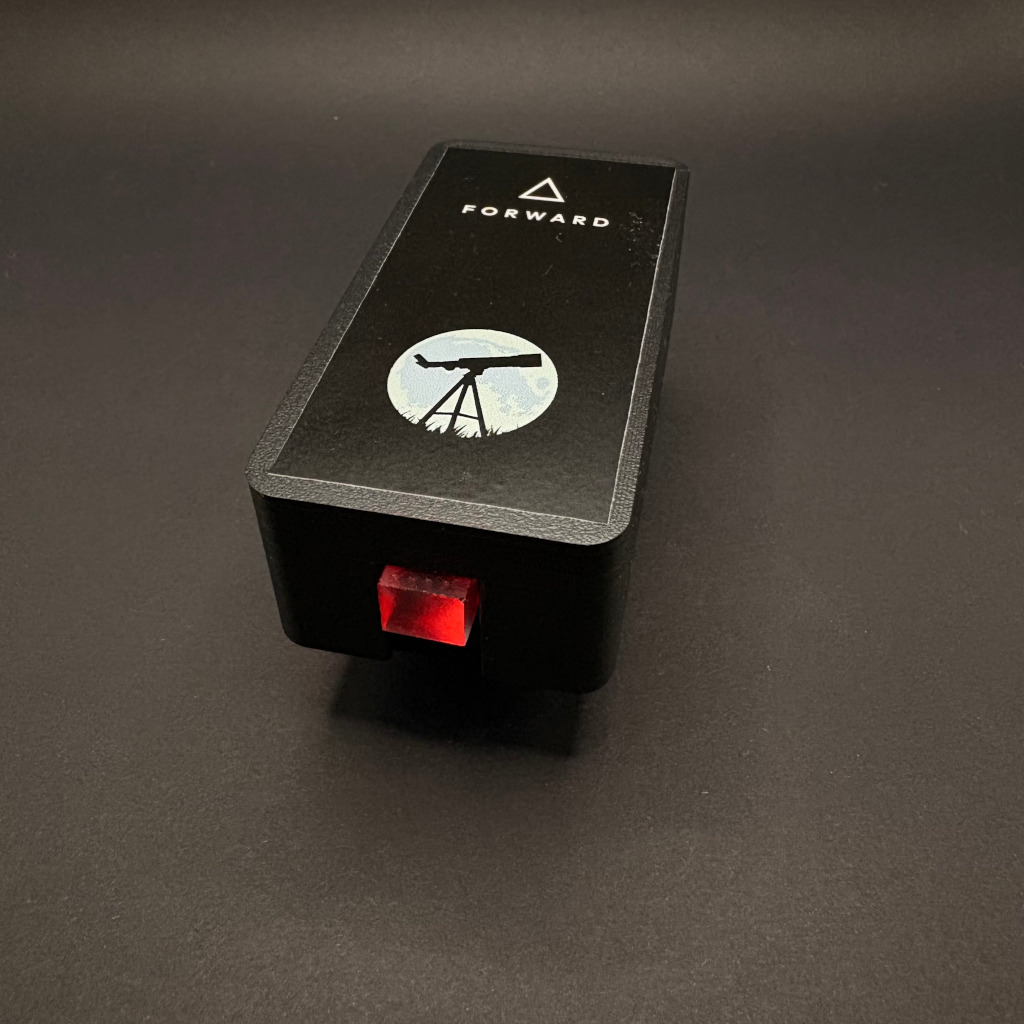
Introducing Stargraph
Compatible with Altitude-Azimuth, Equatorial, Dobsonian, and Fork-Mount
telescopes. Just mount it to your standard finder shoe and begin your
search across the stars.
Join our waitlist here.